Today's lament: "Doug Ford is dumbing down Ontario" by @maxfawcett
Wednesday, April 10, 2024
Today's lament: "Doug Ford is dumbing down Ontario" by Max Fawcett
Friday, April 5, 2024
Today's tonic: "Why do so many ignore facts, like the carbon tax works? Because we’re hard-wired to follow the pack"
Today's tonic: "Why do so many ignore facts, like the carbon tax works? Because we’re hard-wired to follow the pack," by columnist Andrew Phillips of the Toronto Star.
This piece is a great reminder about how most people choose to think and approach the issues of our time.
Here's an excerpt:
Friday, March 29, 2024
Today's tonic: "Crappy as it is, the @CBC may turn out to be the hero we need," by Rick Salutin
Today's tonic: "Crappy as it is, the @CBC may turn out to be the hero we need," by Rick Salutin in the Toronto Star.
#cdnpoli #media @TorontoStar @CBCNews
Thursday, March 28, 2024
Today's tonic: "TikTok, Snapchat respond as Ontario school boards sue social media giants"
I read this story today and felt relieved that responsible professionals who are charged with the care of children and youth are taking action to hold gluttonous, unethical social media companies accountable for how they've targeted all children and youth for addiction to their platforms.
This has of course happened in the spare time of children and youth, not in the classroom, where cell phones have been banned in Ontario since 2019. The result of these companies targeting youth to get them addicted to their platforms has been catastrophic in terms of social impacts that we are only just beginning to experience and understand.
The story then quotes Ontario Premier Doug Ford's reaction. Without the benefit of his highly paid advisers and partisan professionals or a teleprompter telling him what to say, Ontario Premier Doug Ford gave us all another peek into who he truly is.
His instinct always is to give unconditional, thoughtless support to private businesses NO MATTER WHAT. And to criticize everyone else. And his mind is as lazy as they come:
"At an unrelated news conference on Thursday, Ontario Premier Doug Ford said he "disagrees" with the schools boards' lawsuits, referencing a provincial ban on cellphones from classrooms back in 2019.
"We banned cellphones in the classroom, so I don't know what the kids are using," Ford said.
"What are they spending on lawyer fees to go after these massive companies that have endless cash to fight this? Let's focus on the kids, not about this other nonsense that they're looking to fight in court."
This answer might make sense if kids only access social media sites during school hours from cell phones in school. But of course as anyone who is not an idiot knows, kids access these sites at all other hours of the day.
When Doug Ford has got no one to tell him what to say, he's still the thoughtless turd he's always been. Ontario can do way better than this.Sunday, March 24, 2024
This week’s tonic: “The Middle East and the Erosion of our Public Discourse” by Liberal MP Ben Carr
Winnipeg South Centre Liberal MP Ben Carr is one of many Liberals in the federal caucus torn between his strong support for Israel as an ancestral home for Jews the world over, and the horrors that country's right-wing government and armies have inflicted on innocent Palestinian civilians in reaction to the disgusting pogrom that took place on Oct 7th, 2023.
Most mainstream Canadian minds and hearts were with Israel, as well as with our Canadian Jewish friends in the immediate aftermath of those vicious attacks. We demanded the Israeli hostages be released and that the Hamas forces that conducted the pogrom be destroyed and removed from power.
Sadly, Israeli Prime Minister Netanyahu's armies overplayed their hands and enacted a policy of collective punishment targeting all Palestinians in Gaza for what Hamas did. Rather than utilize the technology that Israel no doubt possesses to surgically target Hamas leaders where they're located, Israeli armies instead decided to shoot missiles into Gazan neighbourhoods, seemingly indifferent to the civilian deaths and injuries they were causing. Claims that the IDF were simply targeting Hamas when they blew up yet another Gazan school or residential neighbourhood rang less and less true, as none were accompanied by verified evidence. We had to take Israel's word for it and ignore what our own eyes were seeing.
The deaths of 1,200 innocent Israelis on Oct 7th do not justify the deaths of 32,000 and counting innocent Gazans. It's disproportion on steroids. Coupled with the racist rhetoric coming from Netanyahu's cabinet and the accusations of thuggery by the IDF, it was clear this was more than simply taking out the Hamas leaders who organized Oct 7th.
Suddenly, it became clear that a grotesque act of genocide against Israelis on Oct 7th was being met with an even larger and more grotesque act of genocide against Palestinians by Israel.
There's been a shift in world opinion on this conflict this time. People like me who didn't have such a nuanced understanding of the long history of the conflict but had long supported Israel's right to exist were suddenly confronted with new facts that horrified us.
We were being told to "Shut up! Support Israel! Any criticism of Israel is antisemitic! And there is no end to the number of missiles we need to shoot at Gazans because they deserve what they're getting for supporting Hamas!"
These assertions also included, "Oh by the way, if you try to hold a single Canadian Jewish person to account on this conflict, you are guilty of antisemitism and need to be stopped."
I feel for Canadian Jews caught in the middle of this conflict. Like I've said before, most Canadian Jews I know have very nuanced, torn feelings about Israel's actions going back decades. I don't believe random Canadian Jews should be targeted by protesters or be held to account for Israel's actions, any more than random Palestinians in Canada or in Gaza should be held to account for the actions of Hamas.
Calls from governments the world over for Israel to show restraint have gone mostly ignored by Israel.
Against this, what are concerned Canadians with families trapped in Gaza, either by Hamas kidnappers, or by the Israeli army, to do? Some take to the streets to protest.
Do I take issue with the tones of some of these protests, which seem to be targeting random Canadian Jews, trying to hold them to account for the actions of the Israeli government? Yes I do take issue with that. It is wrong and it is antisemitic to target anyone in this way just because they're Jewish or perceived to be Jewish.
Amidst all of this conflict, I found this piece this week by Liberal MP Ben Carr, who is Jewish, to be a breath of fresh air.We would never hear such fairness and nuance, coupled with steadfast support for a Jewish homeland in Israel, from any Conservative in this debate.
Sadly, so many in this debate are talking past each other. Some Israeli supporters are engaging in character assassination, questioning the motivations of protesters using heavy-handed and unfair logic, and writing off all protests as antisemitic. Any criticism of the atrocities perpetrated by Israel is immediately met with the accusation the person giving that criticism is antisemitic.
On the pro-Palestinian side, there is ample overstatement and conflation/simplifications that are simply illogical. There are rings of truth, though, too. Ultimately, we are seeing catastrophic death, famine and destruction inflicted on a people by a military with a long history of racist oppression of Palestinians. Where is this is all going? We shudder in horror to admit we appear to be witnessing a genocide in practise, if not clearly in racist intent. The distinction between the two seems insignificant. The end result could be the same, unless Israel pulls back on their destructive efforts.
I hope negotiations to reach a ceasefire, free all of the hostages, and see Hamas removed from power, succeed soon.
Wednesday, March 20, 2024
Friday, March 8, 2024
Today's tonic: In his SOTU speech, "Biden projects a vision of strength that’s been missing from his presidency but will be needed in 2024 campaign"
Like many decent, progressive people, I've been alarmed by the return of the lying, criminal, rapist, fraud-loving, anti-democratic, narcissistic, ineffectual, dangerous Donald Trump to the American presidential race this year.
Despite the misguided worldviews of the Republican base who seem happy to tolerate the lowest depths of depravity their favourite candidate constantly embodies, despite everything his corrupt Supreme Court Justice appointees are doing to help Trump win, I still had confidence in the wisdom of the majority of the American people to not return this villain to the White House this year.
Last night, President Joe Biden's State of the Union speech put to rest any notion that Biden's too tired and unable to show the strength, vigour and inspiring progressive vision to excite the United States again and win this thing. Biden knocked it out of the park! He gave us all a tonne of great policy to get excited about and get behind to help him win re-election.
I've learned to ignore the media frenzy, the constant coverage of this race designed to keep you watching, keep you riled up and upset, and worried for the future. It's not real.
The fundamentals of this race are clear. And last night, we're reminded that Biden can and always brings it when he needs to. He did it spectacularly well in 2020. And I think he's in the process of doing it even better in 2024.
Time will tell but I'm feeling very good today thanks to Biden's performance last night.
In the meantime, if you didn't watch it, have a look at the speech from last night.
Thursday, March 7, 2024
Today's call out against hypocrisy: "The new generation of gay Conservative sellouts"
Here's an excerpt below:
"In the 1970s, some gay community leaders turned their backs on the “less respectable” (read: trans, gender-weird, drag-performing, poor, racialized and/or flaming) members of their community in a cynical ploy to gain acceptance and power for themselves—at the expense of their more marginalized peers. There’s no better example than when, in 1973, the New York Pride Committee tried to bar trailblazing trans women of colour Marsha P. Johnson and Sylvia Rivera from participating in the Pride parade because they were giving the organization “a bad name.” This decision by the local Pride committee exemplified a broader trend where some gay activists sought to push out more marginalized community members to win respectability and influence.
"Flash forward 50 years and history is repeating itself in Canadian politics. As anti-LGBTQ2S+ hate rises across Canada, with even CSIS sounding the alarm, and trans lives being used as a political punching bag by far-right groups, Melissa Lantsman and Eric Duncan, the two (and only two) openly gay Conservative MPs, and other Conservative MPs who’ve called themselves our allies, are turning their backs on LGBTQ2S+ rights.
"Following federal Conservative leader Pierre Poilievre siding with transphobes in his opposition to gender-affirming care for minors, his remarks at rallies about so-called “gender ideology” and, most recently, his comments in support
of banning trans women from women’s washrooms, not only have Duncan and
Lantsman refused to speak out, Lantsman went so far as to defend
Poilievre’s comments. Asked about his stance by the Hill Times last week, Lantsman
said, “I think the leader has made his common sense Conservative
position very clear, and our caucus stands by it, alongside most
Canadians.”
Thursday, February 15, 2024
Today's warning: "CSIS warns that the 'anti-gender movement' poses a threat of 'extreme violence' to the 2SLGBTQ+ community in Canada"
Intelligence agency says risk will 'almost certainly continue' over the coming year
"Canada's intelligence agency is warning that extremists could "inspire and encourage" serious violence against the 2SLGBTQI+ community — a threat the Canadian Security Intelligence Service says almost certainly will continue over the coming year.Monday, February 5, 2024
Why Danielle Smith’s proposed anti-trans legislation is so wrong...
 |
Smith's history supporting queer rights isn't stellar. Just 12 years ago, she didn't think it was a big deal for one of her
then-Wildrose candidates to have called for all queer people to burn in a
"lake of fire". Her judgment has been questioned for some time. I think she's just gotten better at looking the part of premier lately.
Except last week when Smith announced new legislation she plans to introduce this fall in the Alberta legislature that would, among other things, ban gender-affirming health care of any kind for Alberta youth 15 years old or younger, even puberty blockers and hormones.
Smith's paternalistic rationale given to justify this ban is that youth must be prevented from making decisions they may regret later in life.
It's the same sort of paternalistic, nonsensical thinking that surrounded the debate over sexual orientation and gay people in decades past in Canada. Back then, many conservatives like Smith also believed being gay was somehow a "phase" or something you fell into by choice, and could easily be "converted" out of through some old-fashioned Christian deprogramming. Of course, they were wrong then about gay people, just as they're wrong today about trans people. I knew I was gay when I was 13, and it definitely wasn't some "phase."
The end result of this particular provision in Smith's proposed law today will be that more trans youth - who typically experience higher rates of depression, self harm and suicide after the onset of puberty - will have to suffer in painful silence until they're 16 before they can do anything about it. Many more of them won’t make it to 16 if this law passes.
Smith is also promising to ban trans girls from competing in
sports against cisgender girls. It's not clear at all that this is a
problem in Alberta or anywhere else. It's not like there are armies of
highly athletic and muscular trans girls demanding to get into girls'
soccer leagues or swim teams. This is a solution in search of a problem.
In addition, Smith announced that should trans kids under 16 want to at least be called a name or a pronoun that conforms with their gender at school, they will be outed to their parents, who will then be able to veto this freedom. If those parents then become violent toward those kids or kick them out of their homes, Smith doesn't seem to care.
Furthermore, Smith announced if 16 or 17-year-olds want to change their names or pronouns at school, they will also be outed to their parents (who at least won't have a veto over that choice). If those same parents then become violent toward those young people or kick them out of their homes, Smith again doesn't seem to care.
The end results of all of these policies will be more suicides, more self harm, and more violence.
Smith's plans also call for bans on any types of gender-affirming surgeries for those under 18.So why ban something that isn't even happening?
The answer is simple: Smith's priority is playing politics and further inciting cultural wars, and she seems happy to sacrifice the well-being and safety of queer youth to do it. Rabid right-wing zealots have latched onto the issue of transgendered peoples as a wedge issue to try to spread hate, divide societies and win more political power.
Smith is a part of that problem, as evidenced by her recent appearance with American right-wing liar Tucker Carlson, Canadian asshole extraordinaire Jordan Peterson and convicted criminal Conrad Black.
Even more awful was Smith's duplicitous presentation last week, speaking in soft tones (what an accomplished actor she is), pretending to "care" about the well-being of queer youth. While in truth, she stabbed them in both the face and the back.
Tucked away in the announcement is the pledge to now remove "sexual orientation" education, as well as "gender identity" education and even sex education from school lessons for all Alberta youth unless their parents "opt in" and consent to their kids receiving these lessons. Yes, Alberta students won't be allowed to learn anything about LGBTQ+ people unless parents are okay with it.
In the 80s and early 90s, my high school was a hotbed of homophobia and violent harassment mostly thanks to my fellow heterosexual students. I suffered in great silence and isolation in my Catholic public school, but I don't think my experiences were much different from those who attended public schools in Ontario. Rampant, repulsive homophobia was completely mainstream then. It was hard to live through.
Today, sadly, I suspect if you walk down typical high school hallways in Ontario, Alberta, or anywhere, I'm sure there's little difference: verbal assaults using the word "faggot" I hear are still common, as is vicious bullying, as we know.
Schools, school boards and governments are obliged to try to provide safe learning environments for all children, not just heterosexual children.
The introduction of mandatory education into the truths around sexual orientation - including that LGBTQ+ people don't choose their orientations, and that homosexuality exists in roughly the same percentages (about 3 to 5%) across all demographics in society and has for centuries (since we've been able to record these histories) - is essential to combating homophobia in schools and promoting the safety of queer youth in our care.
To make this essential education now optional, with the likelihood the most homophobic will now be free to continue their homophobic bullying, even encouraged to do so implicitly by Smith's draconian law, will make Alberta schools more dangerous for queer youth and queer people in general.
Even to target LGBTQ+ peoples for this special mistreatment sends a message of anti-queer disrespect, that there is something wrong about learning these truths. Why else would you be required to opt in to receive them?
Merely teaching children that LGBTQ+ people exist is not indoctrinating children. It's teaching them the truth about the real world. For the queer children in schools, learning you’re not alone saves lives.
It has long been clear that when it comes to laws governing children or youth in our care - such as in our public schools, or in other laws impacting on children - those laws must always be in the "best interests of the children." Courts have struck down numerous laws that violated the "best interests of children."
Of course, "best interests of the children" doesn't mean "doing whatever the kids want." In fact, many children might disagree often with what is determined to be in their best interests.
I do sympathize with parents who feel they have a right to know if their kid is using a different pronoun or name at school. I also sympathize with queer youth who have a right to privacy and safety as they struggle to figure out who they are and where they fit in this scary world.
As we struggle to find the right balance on this issue, I think one thing is clear: our laws should always be written with the best interests of children in mind.
The proposed laws announced last week by Danielle Smith are anything but. When or if Smith actually introduces this legislation in the Alberta legislature, we'll see if she includes the Charter of Rights' notwithstanding clause in it, which would exempt the legislation from Charter challenges for five years.
But I’m not sure even the notwithstanding clause would protect these laws from being challenged and struck down. They are clearly written in violation of the best interests of children or youth. They clearly put children and youth in danger and subject them to considerable harm. I expect the courts would agree and strike them down given the chance.
This is not an area in which provincial governments should be legislating. One-size-fits-all policies will lead to inevitable harm. We ought to leave these difficult, deeply personal and medical issues up to the individuals involved: the parents, the medical professionals, the educators, and most importantly, the children and youth in our care. Not overreaching, misguided politicians trying to win more political power for themselves.
Wednesday, January 17, 2024
Today's tonic: "Andrew Scott is right – it’s time to retire the phrase ‘openly gay’"
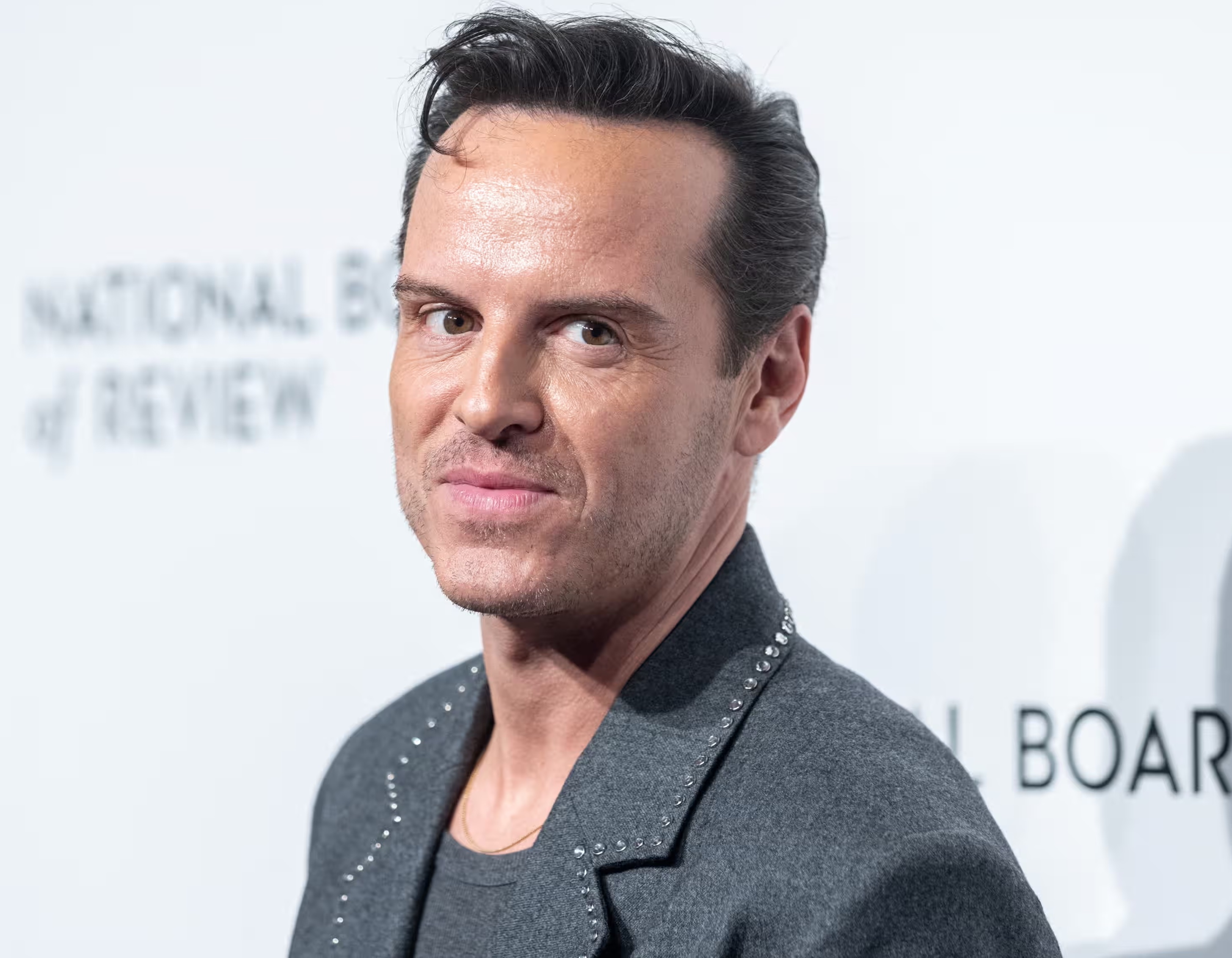 |
| Actor Andrew Scott |
Sunday, December 31, 2023
2023 was a tough year for the planet, but thank the Universe for Jimbo!
It's been a tough year for the world.
Fascism and dictatorship are on the rise, while democracies are under constant attack. War continued in Ukraine thanks to the most evil person on the planet: Putin.
Fascist Islamic antisemitic hatred in the form of Hamas also lashed out and brutally murdered 1,200 Israeli citizens and kidnapped over 200 more in southern Israel on Oct 7th.
The Israeli response pushed back hard, as any decent country would, launching a war against the Hamas cowards, who willingly again hid among their own people in Gaza, thus causing Gazan casualties to skyrocket.
Fascism continued to rise in the U.S. with the dangerous man child Donald Trump continuing to seize attention and win the hearts of the deplorables in the morally bankrupt Republican Party.
Other forms of bigotry skyrocketed too, inspired by Donald Trump and other fascists.
Trans youth, perhaps the most vulnerable and misunderstood human beings on the planet, were the targets of amoral, despicable right-wing politicians and others eager to join the fascist bandwagon.
There was decent pushback though. Jack Smith courageously charged the fascist Trump with many crimes in the U.S. surrounding his efforts to destroy American democracy. Trump and co-conspirators also faced other charges in the state of Georgia and Florida.
Those who believe in the rule of law continue to demand it be followed. We'll see if Republican-leaning judges still stand by it too in 2024. America may be reverting to fascist / sociopathic rule one year from now if some polls are to be believed (I don't believe them.)
I'm lucky to be with my loving husband going into 2024. My family is relatively well and happy. My friends are still pushing through despite some personal setbacks this year. I'm thankful for so many good things and pledge to continue to work hard to better those things I can change.
As I look back at this year, I remember the great art and entertainment that brought me and many others happiness.
My favourite pop culture icon to re-emerge with a hilarious vengeance: Canadian-born drag queen superstar Jimbo, who won Rupaul's Drag Race All Stars Season 8.
Yes, they've had eight All Stars seasons. This Canuck made me proud and helped me laugh my ass off this year. Put aside your worries and enjoy some of the highlights below as you end out 2023:
Subscribe to:
Posts (Atom)