Friday, January 3, 2020

My Favourite Films of 2019 - UPDATED AGAIN

Scene from Parasite
Sometimes making a list of one's favourite films for the previous year shortly after New Year's Eve can be a fool's game.  Sometimes movies need a bit of time to fester in my mind before their true greatness is realized.  Sometimes it takes the intense love expressed by others for me to truly open my eyes and get past my own initial hangups about a movie.  That happened to me this year with the masterpiece Parasite.

When I first saw it in November 2019, I was initially a bit disappointed with it.  I hadn't enjoyed it as much as I enjoyed Boon Jong Ho's previous films including Okja or Snowpiercer.  It was that disappointment accompanied by a distrust of group consensus that prevented me from appreciating Parasite that much for several more weeks.

Yes, the Oscars refocused my mind, I must admit.  They so rarely do, but this year was an exception when the most inspiring, original and fearless flick took the top prize, not only for Best International Film, but also Best Picture.  Had I missed something?  Yes, apparently.  I re-watched Parasite a week later with a friend, accompanied with some booze.  And to my joy, the second viewing was as delightful a second viewing one could hope for.  I found myself loving all the fine details of the piece, laughing as it unfolded, then switched gears and genres half-way, and approached its astonishing and thought-provoking conclusion.  I was hooked.  A third viewing the next week with another friend made me realize I had made a mistake with my Top Ten Favourites list of 2019.    

I've finally gotten around to updating this post to accurately reflect, for posterity, what I truly think about the films of 2019.  Parasite is very much my favourite film of the year.  Yes, 1917 was astonishing, but also just a very good war flick, the sort of which we've seen many times before.  I still am very glad I put Ad Astra very close to the top of my list.  I do love it more than 1917, after all.  It will remain my guilty sci-fi pleasure of 2019 as well.  

I have always amended my Top Ten list in years past.  This year was no different, although I will admit that I've never changed my list this much, this long after the year's end.  Is it cheating as a film lover to only truly appreciate a film after the Oscars anoint it the best?  Maybe.  My changing mind about Parasite has been instructive to me: I should try to keep a more open mind when watching the films I do and try better to put aside all prejudices and simply let them wash over me.  Perhaps I would've loved Parasite much sooner.

Without further ado, here are my top picks of 2019:

1. Parasite: Superb and unforgettable social commentary and satire, so relevant to our times that it stings the senses while still feeling enjoyable and entertaining, this film portrays a working class family that gradually takes over the various "help" jobs in a rich Korean family home.  The plot twists are amazing.  The artistry is so impeccable, I'm slightly ashamed I didn't appreciate this masterpiece earlier than I did.  Yes, it took the Oscars to make me realize how I had erred not putting this flick higher on my own list.  After four viewings (with more planned), this is no doubt my favourite of 2019.  

2. Ad Astra: I'm a sucker for artsy, philosophical sci-fi flicks.  With gorgeous cinematography, uber cool art direction, plus haunting, soothing, symphonic music, stellar visual effects (which here easily best those of the recent First Man), and a lovely performance by its beautiful, likeable, but complicated lead (in this case, Brad Pitt), this film takes its place among the best in the genre, in my opinion.  This is magnificent work by writer-director James Gray, whose last film, The Lost City of Z, I loved and recommend as well.

3. 1917: I'm also a sucker for great, historical war films, especially those with tremendous heart.  Throw in some handsome young leads, including George MacKay, and breathtaking cinematography, and it's cinematic ecstasy for me.  Roger Deakins' work in this film as DOP is a must-see.  The continuous, long shots are awesome to behold.  The acting is stupendous.  The direction by Sam Mendes among his best accomplishments.  I liked this one better than Dunkirk, which says a lot.

4. Us: Better than Get Out in many ways, this stunningly original, chilling story, also by writer-director Jordan Peele, about a family stalked by mysterious strangers who look exactly like them is not one I'll ever forget, including its sensational, jaw-dropping ending.  Lupita Nyong'o plays both mothers to perfection.

5. Once Upon a Time...in Hollywood: I must admit I love most of Quentin Tarantino's films.  I don't usually mind the extreme violence he indulges in as long as it's brief and serves a purpose, typically comedic.  Who could really object to seeing Hitler blown to bits in Inglourious Basterds, after all?  This is a sweet masterpiece, in typical Tarantino style, but also very heartfelt.

6. Portrait of a Lady on Fire: The queer film of 2019, without a doubt.  I caught this film at TIFF and was thankful I chose it.  The story follows the slow-burning romance between an 18th century young French female painter and her muse, a young woman whose wedding portrait she is commissioned to create.  Beautifully directed by Celina Sciamma, watching this story unfurl was a delight, especially the final scene at the orchestra with Antonio Vivaldi's Concerto No 2 in G minor.  Wow.

THE REST OF MY TOP 13:

7. Jojo Rabbit: Great historical satire about the banalities of hate.  Unforgettable.

8. Captain Marvel: Brie Larson kicks ass in this super hero origin flick that is totally original and extremely funny.  The special effects used to make Samuel L. Jackson look like a 30-something are far better than anything seen in The Irishman.

9. Harriet: Stunning and urgent historical drama about Harriet Tubman, one of America's greatest heroes of the Underground Railroad.  Cynthia Erivo is sensational in the lead role.  Definitely a masterpiece.

10. Marvel's Avengers: Endgame: A perfect finale to this saga. I've hesitated to elevate super hero films to my top ten list in the past.  But screw it: I'm a nerd who loves these flicks.

11. Spider-Man: Far From Home: The most entertaining Spider-Man flick I've seen. Plus Tom Holland and Jake Gyllenhaal make the perfect onscreen duo, even though all the homo-eroticism was definitely in my head.

12. The Best of Enemies: An expertly acted and crafted story that proves even the worst racists among us are capable of changing and the best way to bring somebody over from the dark side is not to insult and castigate them, but reach out to them with compassion.  Even if compassion is the last thing you think they deserve.

13. Pain & Glory: A lovely and inspiring addition to Pedro Almodovar's repetoire, with a superb performance by Antonio Banderas.

FOLLOWED BY, IN ORDER OF EXCELLENCE:
Yesterday 
Rocketman 
Little Women
Bombshell
The Two Popes
Star Wars: Rise of Skywalker
The Report
A Beautiful Day in the Neighbourhood
Judy
Lucy in the Sky
Marriage Story
Joker
The Irishman
Knives Out
Clemency
Incitement
Terminally In Love (a short film I saw at the Inside Out film festival in Toronto, mesmerizing, trippy, funny, unforgettable)
War Movie (another short film I saw at Inside Out)
Thrive (another short film I saw at Inside Out.)
Ma
The Blonde One
Just Mercy
My Zoe
Maleficent: Mistress of Evil

STILL NEED TO SEE, IN ORDER OF PRIORITY: 
Apollo 11
Queen & Slim 
The Lighthouse
The Aeronauts
The Laundromat
Seberg
The Farewell
Tolkien

DISAPPOINTING: 
On the Basis of Sex
The Obituary of Tunde Johnson
X-Men: Dark Phoenix


Tuesday, October 15, 2019

New Indiegogo campaign launched to raise funds for my new short film, "Big Snore"

Actor Scotty Murray during auditions for Big Snore
Today, I launched a three-week Indiegogo campaign to help raise much-needed funds for my new narrative short film, Big Snore.  I hope that you might consider helping me out!  

As many will know, I've been working part-time on film projects for over ten years.   My first success was co-writing and helping produce a beautiful short film, The Golden Pin, back in 2009 with director Cuong Ngo (the link to view the film is on the right.)  I also worked with Ngo on his first feature film, Pearls of the Far East, as an additional writer and associate producer.

In 2015, I finally decided to overcome my fears and take on a project as director.  The result was the short narrative film called Tri-Curious, a comedy about how last minute anxiety threatens to ruin a young couple's first threesome together.  It was an awesome experience and I remain very thankful to those artists and friends who shared their talents with me making that film, and to those individuals who donated generously to the Indiegogo campaign that helped finance it.

Tri-Curious played in several international film festivals, it earned over 1.5 million views on YouTube before it was exclusively licensed by gay streaming service Dekkoo, and released on a DVD compilation by TLA Releasing

Since then, I've literally spent the last couple of years contemplating what kinds of film projects to do next.   Making something that authentically expresses my values as an artist and a human being is very important to me.

INSPIRATION FOR THIS NEW FILM: 

As I detail on my new Indiegogo campaign page, inspiration for Big Snore happened one late night last year when I was lying next to my partner Samuel in bed while he slept.  I've always been a light sleeper, easily awoken.  Samuel, on the other hand, is a heavy sleeper who occasionally snores. (In truth, Samuel tells me I occasionally snore as well.)

That night, I couldn't find rest as his snores were unusually loud.  I struggled, I shifted in bed often, I took a sleeping pill.  Momentary frustration eventually gave way to inner peace when I remembered how lucky I am to be able to share my bed and my life with this wonderful man!  "What would I do if you ever stopped breathing?" I whispered.  Suddenly, EUREKA!  This could be my new story!  This could be an idea that I can carry all the way to production and beyond.  This story could say something I'd like to say about relationships and love in general.  Inspired, I soon fell asleep and slept like a baby.

I've been working on the script and preparing for this shoot since.  The script details one night in the life of a young gay couple, one of whom snores very badly, the other a light sleeper who struggles to get some needed rest.

I'm not one to spend months drafting up applications and waiting for responses from public funding agencies.  I've found such endeavours in the past to be somewhat futile, especially since competition for such dollars is so fierce.  For now, I'm hoping that this crowd-funding campaign will raise the necessary funds to give some compensation to my actors and crew, as well as fund the film's crucial post-production sound design.

One of my ambitions as a storyteller is to normalize the lives and experiences of LGBTQ people, without whitewashing the elements of our lives that make us unique.  All audiences want stories that are honest but also connect with them emotionally.   I'm hopeful that Big Snore will earn many chuckles and nods of appreciation from all audiences.

I hope you might consider contributing to this project.

Sunday, September 29, 2019

Re-engaging after yesterday's hateful march against my own community in Toronto and the inspired counter-protest

I haven't written anything here since June when I expressed my new love and support for Democratic presidential candidate Elizabeth Warren (a love and support that has only grown stronger.)

My focus these last few months has been strengthening my own day-to-day life and perhaps even enjoying it more. You could say I was being selfish.  Few if any issues in Canada had inspired me to write, despite a lot of course happening as it always does.  I have also disengaged from social media especially Facebook.  I have found myself avoiding most of the new social media platforms that have invaded our lives these last years.  I had been foolish with some of my engagements on those platforms.  I had angered others and undermined some of my own relationships.  I was worried some of my efforts at communication were being seen as shrill.

So instead, I've chosen to disengage.  To step back and re-evaluate.  To try to focus more on real life experiences rather than virtual ones.  But disengaging from these platforms cuts one off from the ways our modern world communicates these days.  Perhaps retreat is not the answer.  Perhaps figuring out how to fight, how to love, how to support each other in this online world is our new real life.

I'm disappointed in myself that I didn't hear about both yesterday's hateful march that tried to move up Church Street in Toronto, and the much larger counter protest defending love and the LGBTQ community, until afterwards.  The counter-protest defended my community by moving down Church Street from a rally outside the 519 Community Centre shortly before noon yesterday.  It had been organized in response to a planned march up Church Street of religious bigots who wanted to bring their hate to the heart of the Church and Wellesley neighbourhood.  The counter-protesters were going to have none of that.  They managed to create a massive human barrier on Church Street south of King Street.  The police barricaded both sides, which managed to stall the bigots from heading north of Wellington Street and perhaps cause physical violence (on top of the spiritual violence they were already spouting).  Streets were shut down for hours until the group of bigots dispersed and went back to whatever miserable lives they are leading.  

All of this drama happened before I even heard about it.  How could that happen?  I'm sad to think that my withdrawal has made me blind to the planning of these events.  Facebook invites from the 519 or other groups would've made clear the plans to counter the bigots.  I missed them and I'm ashamed. 

Yesterday's planned march against LGBTQ people wasn't a surprise.  It was planned by evangelist preacher David Lynn, who was arrested in June at the start of Pride month for causing a disturbance after attempting to preach hate in the Village and sparking loud and angry confrontations with local citizens.   Imagine a white supremacist taking his hatred to the heart of the Black community, then complaining about being silenced when he gets shouted down.  He was lucky he didn't get punched.  This kind of aggressive religious bigotry is becoming more common.   Yesterday's march was just the latest manifestation of it.  The haters have been emboldened in recent years by the likes of Donald Trump and powerful conservatives like him.  A misplaced sense of victimhood, arrogance, and bigotry is a toxic mix.
 
In recent years, I've not been overly comfortable as a protester.  I'm not one to make signs and march out on the streets, although I have been definitely an activist in other ways.  I did march and chant in the streets when I was a young adult but it's less my style now.  I engage here and there politically when it comes to the big picture and get involved on the occasional campaign.  But it has rarely been fulfilling in recent years.  But some causes are still worth marching for.  Yesterday would've been one of them.  This was literally an attack by hate-filled bigots in my own neighbourhood.  Their signs would've marched up Church Street right past my home had they not been stopped further south.  

I need to re-engage now.  I need to start making more of an effort to take part and be active in my community in a real way.  I need to find the energy after work to go to meetings I've been avoiding in recent years.  I need to seek out more opportunities to turn my passion and interest and support into something more than likes on Facebook.  There are opportunities to have real human connections, perhaps in marches, perhaps at other grassroots events, perhaps in Pride parades with folks just like me.

I need to get out of this funk and start to see the value in my own contributions again.  I need to find my inner activist again.  I need to write more, something I truly love to do. 

Congratulations and thank you to those great people who did get out there yesterday to defend our community against the bigots.  Who heard about it and took action.  I wish I had been there with you.  I hope to be there next time.  

Tuesday, May 28, 2019

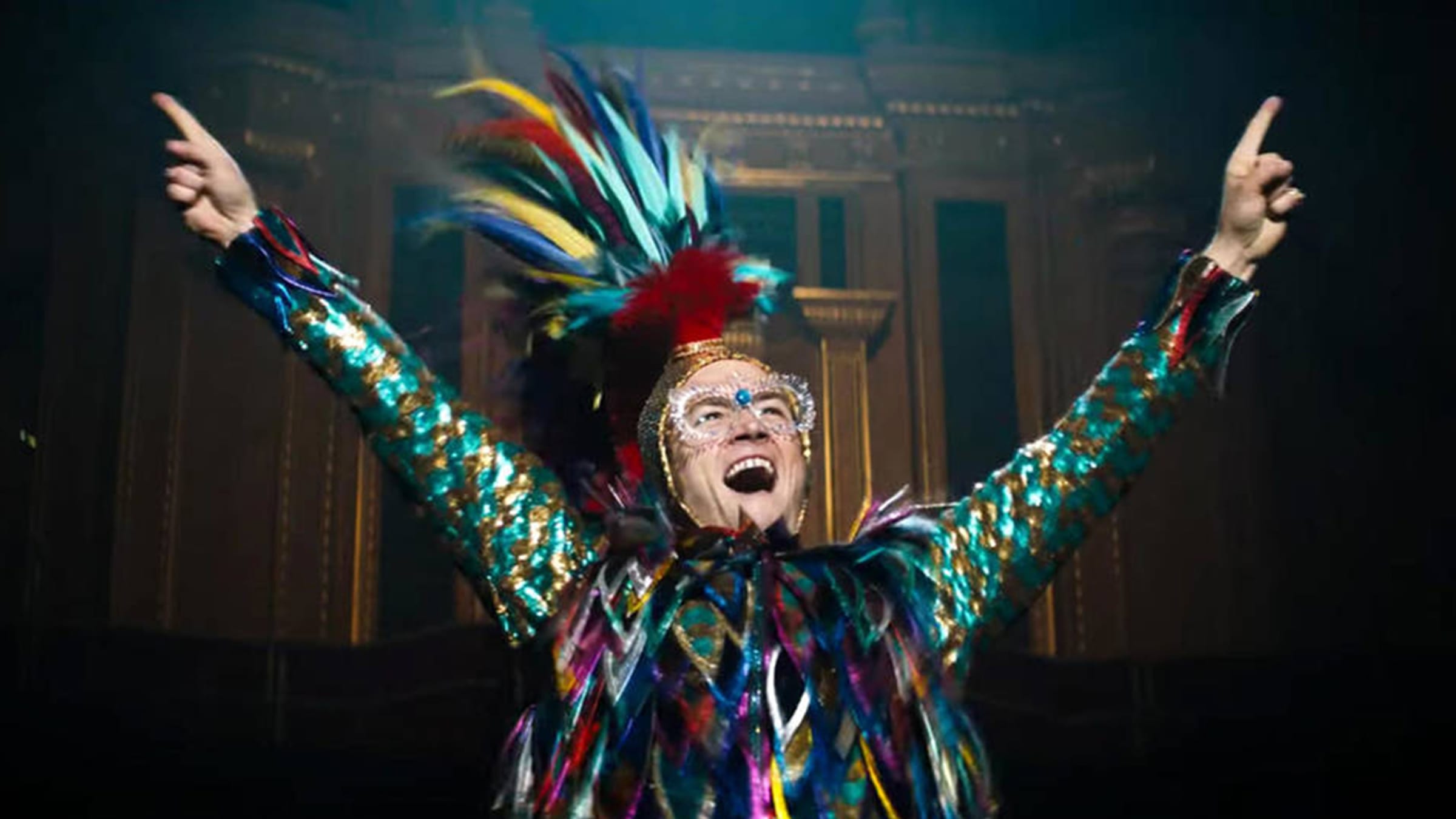
Heartfelt and authentic Elton John biopic "Rocketman" soars in ways "Bohemian Rhapsody" disappointed

Taron Egerton as Elton John in Rocketman
I caught the new feature film Rocketman at the opening night of Toronto's Inside Out LGBT Film Festival last week and loved it.

As Elton John, actor Taron Egerton (previously most famous for the Kingsman spy thrillers) delivers the best performance I've ever seen him give, embodying the musical icon with such heart and authenticity, he rivals Rami Malek's performance as Freddie Mercury in 2018's Bohemian Rhapsody.  In fact, Egerton does his own amazing singing, which gives him one up on Malek (who lip synced), if you ask me.  Egerton is the best thing about this entertaining flick.

I quite agree with this Daily Beast piece: "Rocketman lends a dignity to John’s feelings about his sexuality where Rhapsody disgraces and even demonizes Mercury’s struggle. And while Rhapsody manipulated facts of Mercury’s sexuality and AIDS diagnosis to manufacture an emotional climax in the Live Aid finale, there’s no such bastardizing in Rocketman."

There are an awful lot of tears, but even more laughs in this flick as the emotional struggles of addiction take their toll on Elton John's life.  Most in the audience, straight or queer, will relate on some level.  You can do justice to a superstar's life without making stuff up, plus structure a good film and entertain an audience all at the same time, who would've thought?

Rocketman's strengths put the flaws of Bohemian Rhapsody into clearer focus for me.

I did enjoy much of Bohemian Rhapsody, please don't get me wrong.  Malek was brilliant, the scenes of Queen producing their music in studio were cool, and the final concert scene at Live Aid was rapturous.  (Rocketman's scenes depicting Elton John's spontaneous writing, especially crafting "Your Song" at the piano, also hit such awesomeness.)

But I quietly resented all the praise some straight people gave Bohemian Rhapsody because it was obvious many didn't really notice or even question how that film "treated (Mercury's) sexuality as a predatory gateway drug to a destructive lifestyle."  I had hoped to learn something awesome about Mercury we didn't already know - but instead it was just a story about how a sad and selfish gay man turns his back on his straight Queen band members and collapses into disaster and contracts AIDS because of it.  I also didn't appreciate the dozens of minutes spent watching Mercury flirt with his first wife in the first hour of the film, while the love of his life, the man who stood by him during his final years struggling with AIDS, was reduced to a final act footnote.  It was insulting. 

After experiencing that disappointment, Rocketman is such a satisfying experience. 

I'll be very curious if all the Queen fans who heaped such praise on Bohemian Rhapsody do the same thing for what I consider at least as good a film in Rocketman.  Many will.  All of them should.

It opens in theatres this weekend.  Please check it out. 

Tuesday, January 22, 2019

Close vote against police might just revive Toronto Pride's progressive legacy

An overwhelming grassroots vote against the police participation in Pride Toronto a couple years ago has now evolved into a near split vote.

Grassroots Pride Toronto members participated in a community vote tonight, both online and in person at a special meeting at Ryerson, and the result was 163 to 161 against police in uniform returning to Toronto Pride anytime soon.   There were claims that a last minute influx of members might tip the balance in favour of the cops.  But that didn't make the difference as supporters of the police ban still won the day.

If this community is this divided on the issue, it's clear that the status quo keeping the police out needs to remain for now.  There's no grassroots push to bring the cops back. 

I've struggled to decide how I feel about this issue.  On the one hand, I see a ban as hopelessly divisive and somewhat counter-productive.  On the other hand, letting police in would send a terrible message that we don't care that much about the near failure by the police as an organization to atone for their immense failures and injustices against the LGBTQ community (and other communities).

We do care deeply.   Those opposed to the police returning to a community festival that originated as a political protest against oppression (still perpetuated on a regular basis by the police and their allies) have made impassioned arguments that I find impossible to refute.  

So this vote will stand for the foreseeable future.  Let's continue to debate and engage in our local community.  I wrote late last year that Pride Toronto seemed a mess as an organization.   Perhaps this grassroots vote will again revive its progressive legacy. 

Let's get on with it. 

Saturday, January 12, 2019

Ontario, and indeed all decent public school systems, have an obligation to challenge homophobia with an inclusive curriculum

The ongoing legal fight in Ontario over Doug Ford's decision to placate a small group of social conservative extremists hellbent on denying a safe environment for LGBTQ kids in our public schools grabbed our attention this week. 

I'm proud of the parents, activists and groups who are leading this legal charge to return the modernized curriculum to our classrooms. 

This great article by Martin Regg Cohn sums up the situation nicely, putting it in full context. 

It's not enough for these conservative folks fighting the modern curriculum that they have always had the ability to remove their kids from sex education public school lessons (even though in my mind their kids most certainly need to learn them considering the backwards homes they are growing up in.)  I can only think of the lasting damage caused to any unfortunate, lonely LGBTQ kids living in those homes by their parents' actions.

Yes it is important to protect kids from abuse, both in their homes and their schools.  I firmly support the ability of greater society to create inclusive and healthy public school environments for all of us.    

When I was a kid growing up, I was luckily in a family not too conservative.  My family was fairly typical for the time period of the 1980s and 1990s.  Since I came out of the closet to them all, our family situation has been pretty great, glad to say.

But high school was an awful experience, trying to survive amid the hotbed of homophobia that was mainstream back then.  Social isolation was the rule of the day.  Suicide was contemplated on occasion, but somehow I made it through without ever trying.  Perhaps the faint hope of some kind of future as a gay adult kept me alive.  Yet there was, of course, barely any mention of LGBT lives in my classrooms.  Homosexuality came up on occasion.  Most students were hostile to gay folk.  Teachers, on the other hand, never indoctrinated or perpetuated ignorance or discrimination, even in my Catholic school environment.

Yet overall, the environment was hostile with the threat of social isolation constant.  I always knew that our schools and indeed our curriculum urgently needed to take proactive action to challenge rampant homophobia.  A few visits to public schools in decades since, with the frequent casual use of "gay" and "fag" and "dyke" overheard in hallways, reinforced this need.  We know bullying remains a crisis in our schools.  Not to mention the various new issues kids are now facing.  

Finally in 2015, the curriculum was updated and, among other advancements, mentions of LGBTQ people were added.  It was long overdue.

This is why I'm so angry about what Doug Ford and the Ontario PCs have done.  They have bowed to bigotry and ignorance.  By reverting to the old curriculum which erases LGBTQ people from any official mention, then threatening teachers with a snitch website, the message was clear.   It matters not that months later Crown prosecutors are backtracking, claiming teachers still have the right to use the 2015 curriculum as a resource.

Shame on Doug Ford and the conservatives who have empowered him in this awful decision.  If this year's "consultation" simply returns most or all of the 2015 curriculum to our province's classrooms, then this process has been a sham.  But I have no trust in Ford or his colleagues to do the right thing.

Hence, why the court fight is crucial.  I hope the good side prevails.

Sunday, December 30, 2018

My Favourite Films of 2018 - UPDATED

Alfonso Cuaron's Roma
It's that time of year again!  I'm very happy to share my thoughts on my favourite flicks of this past year!

UPDATE on Jan 17th: In December, I indicated I still had more films to see and that could impact on this list.  But today, I can confirm that no new films will enter my Top 10 for 2018, but I have moved Green Book up from 10 to 8 upon more reflection. In addition, I decided to move If Beale Street Could Talk down from 3 to 6 as it resonated less for me on a second viewing. 

MY TOP 10 FAVOURITES OF 2018:

1. Roma:  Director Alfonso Cuarón returns to his roots with this sensitive, unbelievably beautiful epic.  Told mostly from the perspective of Cleo, a nanny who accidentally becomes pregnant and is abandoned by her lover, this film is a stunning achievement, so sweet and intimate, with moments that exhilarate, titillate, as well as devastate emotionally.  Cuarón was also his own cinematographer on this, delivering shimmering black and white photography that is unforgettable, including many long takes that will shock you with their perfect execution.  Roma is Cuarón's best and most emotionally resonant film by far and deserves to be watched over and over.

2. BlacKkKlansman: This is director Spike Lee's best film since Do The Right Thing, confirming a mastery of his filmmaking craft that is satisfying and exhilarating to behold.  The direction, the performances, the script, the music, everything about this film, is perfection.  While the subject matter focuses on events in the 1970s, it's horrifyingly relevant to today and the perfect antidote for our troubled times, giving voice to those misunderstood folks still demonized today by racist elements that have even taken over the White House.

3.  First Man: Yes, this is another biopic about a white hero we already know much about and there have been several films in recent years about the struggles of the U.S. space program in the 60s.  Some felt this film was emotionally vacant.  I'd call it an authentic story about emotionally muted people.  This movie succeeds because of its focus on the fine details: the tight quarters into which the astronauts cram their bodies, the tiny windows out of which they peer as their rockets surge into the sky amid pounding and disorienting noise, the small piece of jewelry that Armstrong leaves on the moon.  Director Damien Chazelle foregoes the tropes of the genre and produces something original here, a space flick that physics/aerodynamics nerds will adore.  Plus the score by Justin Hurwitz is the most beautiful music I've heard in a movie this year!

4. First Reformed: Wow! While so many films this year lacked originality or guts, this little masterpiece by director and writer Paul Schrader truly got under my skin and challenged me in ways I was happy to be challenged.  This quiet yet disturbing film delves into the soul of a troubled man of God whose spiritual world unravels following a tragedy he couldn't prevent.  The story goes places I never imagined at the outset, yet never goes over the top, and remains nuanced to the beautiful end while still quietly shocking. Actor Ethan Hawke has never been better in a role and truly deserves a Best Actor nomination, if not the top prize.

5.  RBG: As Gloria Steinem quips in this documentary, the 'Notorious RBG' is the closest thing we have to a super-hero alive today.  Ruth Bader Ginsburg is a remarkable human being: quiet, unassuming, calm, measured, and deeply effective.  Watching her in this film actually has taught me how to be a better human being.  And now I'm joining so many millions in hoping that she stays healthy and lives to outlast the monster in the White House who would no doubt replace her with some other right-wing monster on the Supreme Court if he had the chance.

6. If Beale Street Could Talk: Director Barry Jenkins proves the magic he created in 2016's Moonlight was no fluke.  This is a director who knows how to authentically give voice to his community and characters in ways we so need to see these days.  The story follows a young woman's struggle to exonerate her husband and father of her unborn child after he's unjustly accused of a rape.  Tragically honest, engaging and sometimes funny, no one else is making movies like this today.  (Originally I listed this movie at #3 on this list, but upon a second viewing, I've re-evaluated it down to #6 as it is a bit slow and less engaging than I remembered.)

7. Vice: Whereas RBG was hopeful and positive in its exploration of its subject matter (what else could a documentary about Ruth Bader Ginsburg be?), Vice was incredibly dark and angering, leaving a bad taste in my mouth.  But how else would a serious exploration of Dick Cheney's life - devoted to promoting his own power, plus unlimited warfare for profit, lies, elitism, and hypocrisy - make a decent person feel?  This film is unforgiving in its thoroughness of the history, warts and all, and unafraid to make fair speculations about things that are not on the record.  There is no doubt this film will infuriate the real man and he deserves it.  Christian Bale's performance is so good you often forget you're looking at an actor playing a role. 

8. Green Book: A wonderfully entertaining two-hander between great actors Viggo Mortensen and Mahershala Ali working with lovely material.  Foregoing melodrama and the tropes we might expect from this story, this was an enjoyable if somewhat uneventful ride.  Perhaps I was expecting a bit more after all the hype.

9. Black Panther: Director Ryan Coogler and everyone else who worked on this knocked it out of the park, producing not only an immensely entertaining super hero flick, but also an intensely socially relevant film that'll resonate with many for years to come.

10. A Star Is Born: Bradley Cooper's talent knows no bounds.  He pulls off a great directing job here while also pulling off a completely believable performance as a fading rock star.  He also gives all of his actors the opportunity to shine in great performances, including his leading actress Lady Gaga who is perfect in her role.  The first hour of this is pure magic, if you ask me.  The rest is well-done but unremarkable.  Overall, this is highly entertaining.  Does Lady Gaga deserve Best Actress?  Probably not.  Will she win it?  Probably yes. (UPDATE: Actually, no, with Glenn Close's very well deserved win at the Globes, she looks well placed to finally win for The Wife.)

FOLLOWED BY IN ORDER OF EXCELLENCE:
Eighth Grade
Ant-Man and the Wasp
The Rider
Avengers: Infinity War
Can You Ever Forgive Me?
Boy Erased
Mary Shelley
At Eternity’s Gate
The Favourite 
Sorry to Bother You
Deadpool 2
Love, Simon
The Ballad of Buster Scruggs
Fahrenheit 11/9
Life of the Party
Ocean’s 8
Mission: Impossible - Fallout
The Wife
Jonathan
Bohemian Rhapsody
The Front Runner
Annihilation
Crazy Rich Asians
Mamma Mia! Here We Go Again
The Spy Who Dumped Me
Ready Player One

STILL NEED TO SEE, IN ORDER OF PRIORITY:
On The Basis of Sex
Mary Poppins Returns
Tea With the Dames
Widows
Destroyer
Mary Queen of Scots
A Quiet Place
Colette
The Sister Brothers
The Hate You Give

DISAPPOINTING: 
Solo: A Star Wars Story
Hereditary
A Wrinkle In Time
How to Talk to Girls at Parties

CRAPPY, PLEASE AVOID:
Truth or Dare
The Commuter

Saturday, December 22, 2018

Sifting through the ashes for signs of pro-PR life in Canada after latest big referendum defeat...

B.C. voters opted for status quo by 61.3% this year
After this week's big defeat for proportional representation (PR) in the British Columbia referendum, change in Canada remains as elusive as ever.
It's almost enough to make me give up that change is even possible.  

This was the third referendum B.C. has held on the question of voting reform.

The first vote in 2005 was a simple Yes or No vote on a proposed system of proportional representation called Single Transferable Vote (STV), which is used in Ireland, that was recommended by a B.C. Citizens' Assembly.  That referendum immediately followed four years of near one-party rule in the legislature after the B.C. Liberal landslide in 2001 of 77 out of 79 seats.  Voters seemed to grasp the folly of the current system and voted Yes in 2005 to change with 57.7%.  However, the conservative masters in the B.C. Liberal government had set the bar for change at 60% that year and thus the reform failed.

Considering the ambiguous result with a majority voting in favour of change, to his credit, former B.C. Premier Gordon Campbell held another referendum in 2009.  But this time it was a choice between the proposed PR system STV against the current system, First-Past-The-Post.  That year, voters opted to support the status quo with 60.9% of the vote, with only 39.1% voting for proportional representation. 

With the formation of a NDP minority government in B.C. supported by the Green Party in 2017, the prospect of a third referendum came about.

I've been a critic of our current First-Past-The-Post system for years.  Its distortions of voters' intentions, frequently handing the winning party a majority of seats with only a minority of the vote, have irked me to no end.  It has frequently led to the enactment of conservative policies not supported by the majority of voters, like in Ontario right now.  Even worse, First-Past-The-Post sometimes hands the second-place party the most seats, as it did recently in New Brunswick, leaving voters with a government that looks nothing like what they voted for.

The best solution has seemed to move to a proportional representation system so that voters' intentions are reflected in the seat count.  However, there are no PR systems that are easy to understand, including how they use formulae, percentages, or regional lists of at-large candidates to arrive at final seat counts.  All of them look incredibly convoluted next to the current system.

I had hoped for a victory this year.  If not that, I had hoped to see some growth in the support for PR among voters. 

Yet nine years on, the margin against change is even slightly stronger.  This year, 61.3% of B.C. voters opted for First-Past-The-Post.  Despite excellent arguments and years of discussions, there was no growth in support for PR among voters who actually participated in the vote. 

Proponents for reform have argued over and over that 1 + 1 should equal 2 in our voting system.  We've said over and over that 2 + 3 should equal 5, not 2 + 3 = 3 as it does under First-Past-The-Post.  We've argued that 3 + 4 should equal 7, not 10 or 12 as it does sometimes under our current system.

Simple enough.

But voters keep rejecting this argument, opting instead for a system that frequently distorts voters' intentions, handing one party all the power in the legislature. 

It's hard for me to understand this reality.  I'm an idealist perhaps who thinks systems should be primarily just and fair to all, or to as many people as possible.

But sadly, I've also come to realize that the majority of my fellow citizens see life quite differently, particularly those who are more conservative in their values.  To them, life is not about fairness for all, but is winner take all.  To them, life is a race and those who finish first get the spoils and that's how it should be.

First-Past-The-Post rewards mainstream, middle-of-the-road voters who would never describe themselves as radical.   It's fair to say that 70 to 80% of Canadians would largely be found in the centre / centre-left / centre-right area of the political spectrum.  I would consider myself to be centre-left, for example.  While I didn't vote for John Tory this year, I consider him to be centre-right.  So rarely am I overly offended by most of what he does as he's a fairly moderate conservative.

If my moderately progressive side loses an election, as long as the winners aren't too radically conservative, I can live with it for a few years.  It's when our current system rewards a radical conservative do the faults of First-Past-The-Post become more glaring to me.

Canada in some ways has embraced the concept of the collective good.  Our universal health care system is a shining example of this.  Most Canadians do adhere to the notion of basic equality under the law.   

Yet when it comes to our voting system, the majority of Canadians seem to have a block.  A majority of us don't seem to care much that the votes of many have zero impact on the make-up of the legislature.  So cynical are we perhaps about politicians and government, we don't see much upside to a system that produces a more proportional result.  The impact will likely be much the same, I presume many believe.  So why change to a more convoluted system which would have two types of elected representatives (those representing districts and those representing wider regions or perhaps the province as a whole elected from lists)?  I suspect most voters believe life would be little different under PR than under the current system.  Furthermore, most Canadians probably believe that things in Canada, while not perfect, are pretty damn good.  Especially compared with other parts of the world (including other countries where they have proportional representation.) 

There is one more chance for change in the near future in Prince Edward Island.  A non-binding plebiscite was held there in 2016 where voters did pick PR by well over 50%.  But the Liberal government there decided to ignore the results as turnout in the plebiscite was only 36%.  They are instead going to hold another plebiscite in conjunction with the next provincial election in October 2019.  (Incidentally, the pro-PR Green Party in Prince Edward Island currently seems poised to make major gains if not win outright that election.) 

But even if PEI does embrace PR, while it would be a rare Canadian victory for change, it's unlikely it would provide much momentum to the PR cause in Canada.

Especially after such huge defeats for PR in British Columbia, perhaps the most progressive of English-Canadian provinces.

Quebec's new CAQ government did promise to change to a system of proportional representation.  But I'm betting that new premier François Legault will figure out a way to abandon that promise and keep the current system which handed him a majority government with only 37% of the vote.

Had the B.C. vote showed growing support this week for PR, there might be cause for optimism.  If we had seen generational change with more voters moving toward change, one could argue that reform is only a matter of time (like it was for so many other social justice issues over recent decades.)

This opinion poll conducted by Angus Reid did indicate that 54% of voters aged 35 to 54 supported PR, as did 67% of voters aged 18 to 34.  It was older voters who massively defeated PR in B.C.

However, I have to quibble with the poll which doesn't seem to jibe with actual voter turnout in B.C.   The poll asked respondents how they voted in the 2017 B.C. provincial election (when overall 40% voted Liberal, 40% voted NDP and 17% voted Green) and compared it with how they say they voted in this year's referendum.

Angus Reid says that 84% of B.C. Liberal voters supported First-Past-The-Post this year, while 70% of NDP supporters voted for PR, and 74% of Green voters voted for PR too. 

But when you do the math, that equates to about 50% for First-Past-The-Post and 47% for PR.  However, the referendum final result was 61% for First-Past-The-Post and only 39% for PR.  Thus, I have to conclude this poll is either inaccurate or supporters of the status quo are simply much more motivated to vote in referendums on this question.

Either way, it's not good for PR.

It may be time to give up on the PR dream in Canada. 

Constantly putting forth the same strong arguments yet getting crushed in favour of the status quo is getting very tiring.

Yet I expect advocates for change won't give up.  In life, anything worth having never happens easily.  The arc of history does bend toward justice as long as those who want justice continue to fight for it.

Because fundamentally, the distorted results and injustices of First-Past-The-Post can't be allowed to stand forever.   

Regardless of poll results, there is strong reason to believe that younger generations (currently aged 18 to approximately age 54) do strongly value true equality and fairness - values that First-Past-The-Post constantly offend.  That younger demographic will continue to get bigger and bigger.   

Eventually, the older generation will die off, let's be honest.  When Canada is 99% Generation X and younger, it's reasonable to assume that - should strong arguments continue to be made in favour of a voting system that produces results in line with the population's wishes - change is not only possible but likely.

In the mean time, let's keep our eye on PEI.

Thursday, November 1, 2018

What's scarier? A tiny of rump of ignored extremists, or an extremist majority government? Canada needs Proportional Representation!


Last week, I expressed alarm about the fact that 25,000 people voted for a known white nationalist in the Toronto mayoral election, representing 3.4% of the overall Toronto vote.

If a no-hope fringe candidate with a bit of money and media savvy could win that much support in Toronto, it was conceivable that similar percentages of voters in Canada could support white nationalist or other extremist parties in provincial or federal elections as well. 

Under our current First-Past-the-Post voting system, 3.4% wouldn't likely translate into any seats.  But under proportional representation (PR), they conceivably could.

Suddenly the idea of white supremacists gaining a foothold in Canadian legislatures became real to me and it scared me.

I've since recovered. Let me explain.

First, it's unlikely any proportional representation system we'd adopt in Canada would have a threshold as low as three per cent for representation.  Currently, British Columbia residents are voting on some PR proposals that would set 5.0% as that minimum threshold for seats. 

My post last week inspired a spirited debate with a progressive acquaintance who supports the Green Party who took issue with many of my points.  He reminded me that, while extremists have been able to gain footholds in some European parliaments from time to time, they have not been able to win much if any influence.  The bigger, mainstream parties have tended to shun the extremists.   It's likely our mainstream parties in Canada would do the same and instead form coalitions with more moderate parties.  The backlash against any mainstream party for jumping in bed with bigots would be too damaging to be worth it, as it is now.

One could easily expect that, even if extremists won a foothold with 5% of the vote in one election, they could easily slip below that threshold in subsequent elections.

Could such a tiny foothold one day grow much bigger as a result?  It's possible. But under PR, they'd only ever win the representation their votes deserve. 

But under First-Past-The-Post, the rise of an extremist party could be far more horrifying. 

Today, an extremist party could jump into the teens or even 20 percentage point range under First-Past-The-Post and win a lot of seats, particularly if it were mostly located in one region. 

Even more horrifying to conceive, if an extremist party got into the 30% vote range, they'd be capable of winning a majority government under First-Past-The-Post.  

I've found most First-Past-The-Post apologists to be fairly smug and arrogant about how stable things are under it.

We just saw a conservative party in Quebec, with an anti-immigrant agenda, win a big majority with only 37% of the vote, after all.  There, the Liberals, Parti Quebecois and Quebec Solidaire, all more friendly to immigrants, took a combined 58% support from Quebecers.   Yet that translated into only 40% of the seats. 

While I am disgusted by the idea of extremists winning toeholds in our legislatures under PR, I am more disgusted by the constant reality of parties with only minority support winning majority governments under First-Past-The-Post.

What's more scary?  Small parties winning rumps in the corner of our legislatures, exposing their members to scrutiny and possible scandal, all the while the mainstream parties shun them?  Or a far-right mainstream party, like the one headed today by Doug Ford, taking full control of our province now with only 40% of the vote?

Today, we have an idiot drunk on conservative ideology in charge of Ontario, claiming he's got a mandate to stop carbon taxes despite winning only 40% of the vote. 

Today, 54% of Ontarians say they're in favour of Justin Trudeau's carbon tax plan.  Yet, Dougie remains convinced he's got Ontario's support as he tries to undermine the best way to combat climate change and transform our economy for the modern era.

First-Past-The-Post distorts the wishes of all voters every time.

PR reflects those wishes, warts and all.

I'm prepared to live with the occasional wart as long as the giant mess that is First-Past-the-Post goes away.

If one party wins 40% of the vote, it should not win 60% of the seats.  It shouldn't win 55% of the seats.  It should win 40% of the seats.

Any system that would hand Donald Trump the presidency with three million fewer votes than Hillary Clinton is broken.   And First-Past-The-Post / Winner-Take-All frequently hands power to the vote loser. 

We are a democracy.   It's time our voting system actually reflect that.

As I mentioned, B.C. is holding its own mail-in referendum this month.   First-Past-The-Post is once again up against Proportional Representation. Voters are also being asked to select which PR system they'd like to move to should PR be supported by over 50%.

On that front, I hope that Dual Member Proportional wins.  


Tuesday, October 23, 2018

The strongest argument against proportional representation I've ever seen: Faith Goldy's 3.4% vote for Toronto mayor

Toronto mayor final voting results

Yesterday, Torontonians voted in their municipal election and re-elected John Tory by a wide margin with 63.5% of the vote.  Second place finisher Jennifer Keesmaat finished way back but with the still substantial 23.6%.

But Faith Goldy, a far-right propagandist who works through a white supremacist lens and has talked about an upcoming racial civil war in North America, took a disturbing 25,667 votes across the city, or 3.4% of the vote.

Faith Goldy and supporters with Ford at Ford Fest last month
Goldy got a bit famous in neo-conservative circles thanks to her work for Ezra Levant's Rebel Media, a website on which many "mainstream" conservatives like Andrew Scheer have appeared in the past.  Her notoriety increased last year when she "reported" on the Charlottesville white supremacist riot and "appeared on a podcast affiliated with neo-Nazi website The Daily Stormer."

For that, she was fired from Rebel.  It's sad to realize that despite that at least one of her videos still appears on the Rebel's YouTube channel. 

Goldy recently made an appearance at Doug Ford's 2018 Ford Fest and got photographed with the premier.  When questioned about this, Doug Ford first found it difficult to disassociate himself from her. 

Goldy's mayoral candidacy got little mainstream media attention.  In the few mayoral debates that took place, she wasn't invited (although she did try to force herself into at least one of them.)  In fact, John Tory explicitly said he would not stand on the same debate platform with a white supremacist.

But Goldy's signs were all over the city and she had enough money to launch robo-calls and other outreach to voters.   And in the end, she garnered 3.4% or 25,667 votes.

This is the kind of thing that opponents of proportional representation have been warning us about and I must say today I am deeply alarmed.

Yes it was a mayoral race, but if this dubiously qualified candidate can win this much support in a mayoral race in Toronto, imagine what she or similar racists in a political party could win in a general election.

I've argued before that proportional representation is a better voting system than our current First-Past-The-Post system.

But today, I'm not so sure.  As we know, in the Ontario model of proportional representation that was defeated in 2007, three per cent of the vote province-wide was the threshold for winning seats in the House.  That party would then be able to use that representation to influence the larger parties.  Winning that toehold in one election would likely mean its support could grow as potential voters realize they're not wasting their votes on them.

Yet, our current system tends to shut out extremists like this.  It's not enough to win 3 or 5 per cent of the vote, one has to win a wider amount of support enough to carry the most votes in at least one seat to earn representation.

This reality has shut out extremists like Faith Goldy from gaining representation and more power in our legislatures with which they could do great harm.

Of course, First-Past-The-Post also has its many flaws.  It hands parties with a mere plurality of support majority power.   Sometimes it even hands the losing party the most seats, as it did recently in New Brunswick.

A friend of mine on social media recently commented in support of First-Past-The-Post, stating "there is no question that FPTP ensures that political parties are only successful if they avoid extremes and extremists."

In some ways, that's true.  Parties will usually aim toward the mainstream in order to win enough broad support to win seats and government.  Parties that only aim toward the tiny minority that are white supremacists and ignore the rest of us cannot usually win seats under FPTP.

In the United Kingdom, the xenophobic UK Independence Party won an incredible 12.6% support in the 2015 election, but that only translated into one single seat out of 650.  In the next election, its support fell way back to 1.8% and zero seats.

Yet extreme parties like that would win seats under proportional representation.  I'd personally favour a five percent cutoff for representation under PR, but even that total could be exceeded by some upstart white supremacist party, as Goldy's 3.4% total yesterday makes clear.

I equate white supremacists with homophobic bigots on the religious right.  And there's no doubt that the shrinking proportion of religious fundamentalists who would destroy the lives of all LGBTQ people have been frustrated of late as their influence also recedes in Canada.

They've responded to this reality by continuing to stay active in the Conservative parties across the country.  But even in those parties, their influence is diminishing.  The Conservatives no longer explicitly oppose same sex marriage, for example.

Yet, far right activists still have had some success in Conservative parties.  Loser candidates with almost zero qualifications for leadership - like 19-year-old home schooled Ontario MPP Sam Oosterhoff, or Saskatchewan MP Brad Trost - seem to regularly win big amounts of support in that party. 

Earlier this year, right wing extremist Tanya Granic Allen ran a one-note campaign in the Ontario PC leadership race against Ontario's inclusive school curriculum (brought in by Kathleen Wynne, it actually acknowledged the existence of LGBTQ kids in our schools.)  Granic Allen garnered an incredible 15% of the vote, almost as much as Caroline Mulroney.  In the end, that 15% of the vote was crucial to "electing" Doug Ford as PC leader, who's now gone on to become premier and cancel that inclusive curriculum (while still ditching the horrid Granic Allen from his candidate roster after some more homophobic comments of hers were revealed.)

So while no far right fringe party has representation in the Ontario legislature, its influence in determining the outcome of the Conservative leadership shows that the big tent parties under First-Past-The-Post are still vulnerable. 

Yet I have to say that I prefer the status quo over seeing a contingent of bigots winning representation under some possible proportional representation system.  While the influence of the far right on the Conservatives remains real but not overwhelming (and they have virtually no influence in the Liberal Party, the NDP or the Greens,) there's no doubt that influence would grow substantially were they to win a foothold of actual seats in our legislatures.

The far right extreme is not going away.  It's true that certain conservatives like Doug Ford or Donald Trump have been able to appeal to them in order to win power under Winner Take All or First Past the Post.   But those same conservatives under these voting systems must still appeal to the much bigger mainstream, and thus that influence is diminished, it seems.  I'd hate to see what a Conservative Party coalition with Faith Goldy's far right fringe party might accomplish under proportional representation.

Suddenly, I find myself questioning my whole support for PR.  Most PR proponents tend to be well-meaning left-wing activists or environmentalists.  But as they say, the road to hell is paved with good intentions.  Perhaps progressive folks like me who want to stop the flaws of First-Past-The-Post should look to other systems to fix it.

Perhaps ranked balloting - the kind that Justin Trudeau wanted to implement federally and which now exists municipally in London, Ontario - is the better alternative than a system that might give an amplified voice to the far right extremes of our society. 

*************

UPDATE: After some good debate and thought, I've re-thought this and still support Proportional Representation over our current broken First-Past-The-Post system.  Click here for my update. 

Sunday, September 30, 2018

New Brunswick and now Quebec elections once again expose major flaws with our voting systems...

CAQ's François Legault could win majority with only 30% of votes
I've long advocated for proportional representation voting systems that would produce results that genuinely reflect the choices made by voters.

It's worth noting that in every emerging democracy in recent decades, proportional voting systems have been put in place in order to keep extremist minority impulses in check.

Yet here in Canada (as well as Britain and the United States), our archaic Winner-Take-All / First-Past-The-Post voting systems persist.  In Canada and the U.K., parties win seats by simply taking the most votes in the seat.  So one entire seat can be occupied by one party for an entire parliament simply because it won as little of 25% support in it, as long as all other candidates splintered the remaining 75%.  One party has regularly been able to win a majority of seats despite winning well under 40% of the overall vote in a province or country. 

Similarly in the U.S., as we know, the electoral college elected Donald Trump because he won achingly close victories in just the right number of key states, even though Hillary Clinton had overall won 2% or almost three million more votes across the entire country.  

As Andrew Coyne (long an advocate for proportional representation too) states here, Winner-Take-All / First-Past-The-Post tends to produce results wildly disproportionate from the actual voting when three or four major parties are competing.  

Clearly, electoral systems that distort voters' wishes should be replaced.  Yet those who control any processes for change of course have conflicts of interest as they won power because of the current system.

It was little surprise that Justin Trudeau turned his back on his electoral reform promise when it was clear the only change he wanted would be unacceptable to all other parties and most reform advocates.

Other referendums have been held in Canada, including in Ontario in 2007 when the McGuinty government also lost its zeal for change after winning a big majority under the current system in 2003.  In that 2007 referendum, the Grits determined that 60% support was needed for change (a similar and unfair high mark has been the norm in most Canadian referendums on this topic.)  The McGuinty Liberals also refused to fund education campaigns that might explain to voters the real weaknesses and strengths of both systems.  Into that void jumped the private sector media including the Toronto Star which was more than happy to misinform the public with scary stories about Italian pizza parliaments and chaos.  Thus, cautious Ontario voters had little information and overwhelmingly backed the status quo.  It's been that sense that Canada, as well as the U.S. and U.K. seem to be strong societies and economies (at least for the privileged and white majorities), so why do we need to fix something that may not be broken?  

Of course, I'd argue that any system that elects Donald Trump as president despite him winning 3 million fewer votes is broken, and the dire consequences are now obvious.  If our societies are strong, it's despite of our voting systems, not because of them.  

In New Brunswick last Monday, the governing Liberals took 38% of the vote, versus 32% for the Conservatives, as well as about 10% each for a new party called the People's Alliance (PA) and the Green Party.

But this translated under First-Past-The-Post into 22 seats for the Conservatives, 21 for the Liberals, 3 for the PA and 3 seats for the Greens.   The governing Liberals under Brian Gallant pledged to try to win the confidence of the House at their first opportunity, as would be customary after a result like this.  Yet that didn't stop New Brunswick Conservative Leader Blaine Higgs from claiming a "mandate to govern" which actually doesn't exist.  The fact that his party shrunk in voter support from the previous election and now lagged behind the Liberals by 6 points meant nothing to him.  

Tomorrow is voting day in Quebec's provincial election as well, and there too it seems that First-Past-the-Post will distort voters' intentions.  Polls show the moderately conservative party Coalition Avenir Quebec (or CAQ) slightly ahead of the governing Liberals, with both hovering around 30%.  The separatist Parti Quebecois seems to be on the ropes now well back at 20%, and the upstart far-left Quebec Solidaire just behind them.   

Because of this four-party splintering, it makes it hard to predict.  However, the CAQ has a clear lead among francophone voters who make up the vast majority in 100 of the province's 125 ridings, while the Liberals have weak francophone support (but still have overwhelming support from anglophones and allophones who live mostly in Montreal.)  So analysts predict this will lead to a bounty of seats for the CAQ, perhaps even enough to win a majority of seats in the province.   Thus we could end up seeing a majority government with only 30% voter support.  That's repulsive. 

Is there hope for change?  One better hope for a CAQ minority government with the Quebec Solidaire and the PQ holding the balance of power, I say, as all three of those parties have pledged they will move toward a proportional voting system after this election.  A minority government would keep the CAQ government's feet to the fire, perhaps forcing change.  A majority CAQ government would likely abandon changing a system that gave it all the power, I predict.

Even in Alberta, where the NDP finds itself in power for the first time ever, you'd think that Premier Rachel Notley would seize this opportunity and bring in proportional voting.  I'm shocked that she hasn't, frankly, as her party has long been shut out of any decision-making prior to 2015 because of the current system.  It now looks likely that the united Conservatives there will romp back into power in 2019 and leave the NDP back in the wilderness for decades.  That's a shame.  (Remember that every time a sanctimonious New Democrat chastises the Trudeau Liberals for not implementing electoral reform - ask them why Notley's NDP in Alberta didn't bother when they had the chance.) 

There is one major glimmer of hope on this issue in British Columbia, where the minority NDP government was able to take power with the support of three Green Party MLAs, ousting the conservative Liberals last year.  The Greens made the NDP agree to hold another referendum on changing the voting system, which will happen this fall.  This time, the rules are fair with 50% needed for victory.   Polls there show PR slightly ahead of First-Past-The-Post, with almost as many undecided.  

If British Columbians can finally embrace a fair voting system, it will give the push for change a huge amount of momentum across the country.  If Quebec also moves to proportional voting, it will help even more.  Suddenly the cynic in me could be replaced by an optimist on this issue again.  

But I'm not naive about any of this.  For various reasons, this issue does not seem to inspire much interest in most voters (which is another reason change has been so difficult to achieve.)  When I write about it on this blog, I find that I get the least number of reads.  I predict this post will be no exception (so if you read this far, I personally owe you a drink - private message me to arrange ;-))

Saturday, September 29, 2018

Here's to the women who can teach all men about dignity in a dangerous world...

Like many people, I've been watching this week's events in the U.S. closely as Brett Kavanaugh fights for a lifetime seat on the highest court amid very credible allegations he raped women earlier in his life.

The white patriarchy as represented by the Republican Party has been hard at work defending him, pointing as ever to the notion that everyone should be considered innocent until proven guilty in a court of law.  Of course, they only truly mean that for white heterosexual men like them, preferably from good stock and wealth.

I've always deeply admired the women in my life, and most women everywhere, who've persisted and frequently succeeded despite systemic sexism.   I've often wondered how many could maintain such dignity and calm amid these conditions, as I am someone whose passionate views sometimes push me into anger even though I've only suffered discrimination based on my sexual orientation (but have benefited from white and male privilege.)  So those examples of dignity and calm have meant so much to me as I've tried to emulate them and keep my own anger in check.  For as we know, a loud angry voice can easily be dismissed by the powers-that-be.

As Mahershala Ali says in the first trailer for the new film Green Book (which I can't wait to see): “You never win with violence, you only win when you maintain your dignity.”

By Bruce MacKinnon, Chronicle Herald in Halifax.
But of course, the testimony this week from Professor Christine Blasey Ford was very dignified.  Her words rang true and triggered many awful memories for too many women who have survived sexual assault.  Sadly, the response of Kavanaugh was typical of those who've enjoyed and taken advantage of their immense privilege all their lives, and see no reason to stop now.

I find it hard to believe Ford is not being completely honest.  I also find it hard to believe the likes of Kavanaugh.  Despite what may end up being a token week-long FBI investigation, it's likely the powerful white men who dominate the U.S. Senate will push his nomination through despite these revelations, because the Republican Party, like all conservative parties, is really about maintaining and strengthening the patriarchy against everything else. 

But hopefully more women will continue to fight and turn their backs on the men who don't seem to care about them much.  That means never voting for political parties or candidates who don't support them including their right to live free from male violence.  

The #MeToo movement is happening at a crucial time.  This is yet another step in the way of progress.  It will be a constant battle and it's unclear how we will resolve these issues. 

The current system of justice is not working for women on this issue.  The burdens of proof needed to convict the guilty are often too high as most cases tend to be one woman's word against one man's word.  In those instances, the lying man goes free.  Because of this, few survivors come forward. 

Perhaps the answer is a society where surveillance of all human behaviour is the norm, so proof of wrongdoing is instantly caught on camera.   China is already heading in that direction.  Western cultures have been much friendlier to men who would do great wrong, knowing they'd never be caught.  Who knows?  If China does become the dominant world power this century (which seems likely thanks to America's continued collapse under the Republicans), maybe that's where we're headed.  Sure you can be considered innocent until the surveillance video from that party proves you guilty.

Of course, I'm not being entirely serious with that last paragraph, but perhaps it's a good point to think about.  Women, people of colour and many others already maintain such dignity and calm amid hostile conditions - a move to that kind of state wouldn't be much different than what they're experiencing right now. 

Of course, most of the white cisgendered heterosexual males who've never had to live under such circumstances would think differently.  They like things the way they are just fine.  The meme of Brett Kavanaugh on the right sums up these sentiments perfectly.

Fighting against and dismantling these systems of oppression takes decades, if not centuries.  Immoral people with power will never give it up easily.   Those who have been on the outside fighting know this too well.  I stand next to them and pledge to continue the fight for justice.